
SI (Super Intelligence) and AI (Artificial Intelligence) both mean the same thing when you are doing simple everyday tasks. We mainly use the term SI as that is becoming more commonly used.
Small business · Sales and customersHandle a customer complaint
Turn an unhappy customer into a loyal one, with a calm, fair reply that puts things right and protects your business.
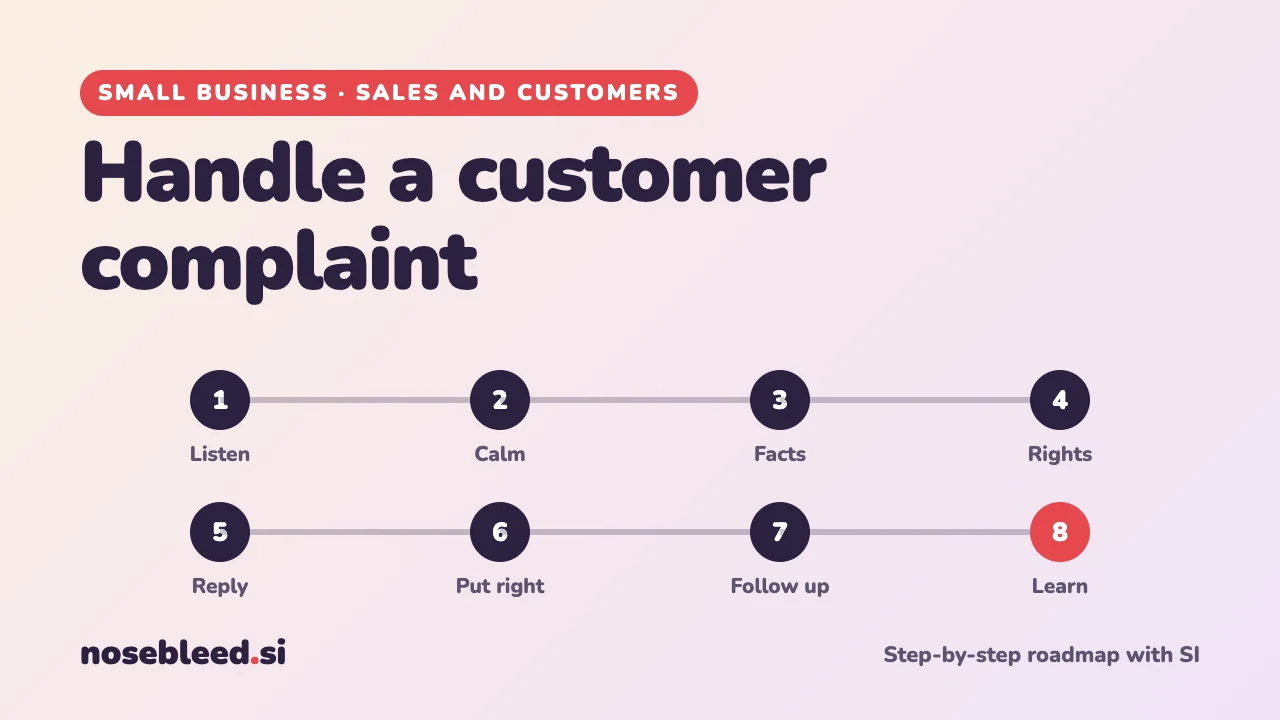
- 🗺️ 8 stages
- ⏱️ Minutes to reply, with a template ready
- 🇬🇧 UK consumer rights, with general pointers
Before you start
Where SI is a great help
- Calming your first reaction
- Seeing the complaint from the customer's side
- Drafting a polite, professional reply
- Explaining consumer rights in plain English
Where you stay in charge
- The facts of what happened.
- What you offer to put it right.
- Leaving out real names and details when you ask SI.
- Taking advice if it becomes a legal dispute.
A complaint handled well often makes a customer more loyal than if nothing had gone wrong. For complaints posted publicly online, see Reply to online reviews.
The roadmap
Listen, and acknowledge quickly
Let the customer explain fully, without interrupting or arguing. Then reply quickly, even if it's only to say you've received their complaint and when they'll hear back.
Stage 1 promptA customer has complained about a late delivery that arrived damaged. Write a short, sincere acknowledgement: thank them for telling me, say I'm sorry they've had this experience, and that I'll look into it and reply by [day]. Don't admit fault or promise anything yet.
Stay calm
Complaints can feel personal, especially in a small business. Don't reply in anger. SI is a good place to let off steam safely before you write anything.
Stage 2 promptI've had a complaint and I'm upset and annoyed. Here's what the customer said: [paste it, with names and details removed]. Help me see it calmly from their side. What are they really unhappy about, and what would they most like to happen?
Remove names, addresses and order numbers first. How to hide personal details
Get the facts
Before you reply properly, check what actually happened: orders, emails, messages, photos, dates, and anyone else involved. Note it down while it's fresh.
Stage 3 promptMake me a short checklist of facts I should gather before replying to a complaint about a late, damaged delivery, and a simple form to record what happened and what I did.
Know the customer's rights
In the UK, consumers have legal rights you can't take away, whatever your terms say. In general:
- Goods must be as described, of satisfactory quality and fit for purpose. If they're faulty, customers can usually reject them for a full refund within 30 days, and after that ask for a repair or replacement.
- Services must be carried out with reasonable care and skill. If not, customers can usually ask for the work to be put right, or for some money back.
- Online and phone sales often have a cooling-off period, usually 14 days, with some exceptions.
Stage 4 promptIn plain English, what are a UK customer's rights in this situation: [describe what happened, with no real names]? What am I generally expected to offer? Tell me where I can check the official guidance.
General information, not legal advice. Business Companion (free guidance from Trading Standards) and Citizens Advice explain the rules. Search their names online.
Write your reply
A good reply says sorry for their experience, shows you've understood, explains briefly what happened (without excuses), and says clearly what you'll do about it.
Stage 5 promptHelp me reply to this complaint: [paste it, with names removed]. The facts are: [what happened]. I'd like to offer [what you'll do]. Write a calm, warm, professional reply: sorry for their experience, show I understand, explain briefly without excuses, and say exactly what happens next. Under 200 words.
Put it right
Do what you said, when you said. Often the fairest answer is what the customer is entitled to anyway. Sometimes a small extra, such as a discount next time, turns things round. If you can't agree, explain your position politely and in writing.
Stage 6 promptThe customer has asked for [what they want], but I think [your view] is fairer. Help me think it through fairly from both sides, then draft a polite reply explaining what I can offer and why.
Follow up
A few days after it's sorted, a short message to check everything is now fine shows you care, and often wins a customer for life.
Stage 7 promptWrite a short, friendly follow-up message to a customer whose complaint I've sorted out, checking all is well now. Not salesy.
Learn from it
Every complaint shows you something about your business. Keep a simple record, and look for patterns: the same problem twice is a sign something needs to change.
Stage 8 promptHere's a summary of the complaints I've had this year: [list them briefly, no names]. What patterns do you see, and what three changes would prevent most of them?
Good follow-up questions
Tap a question to copy it.
Watch out for
- Replying in anger. Write it, sleep on it, then send the calm version.
- "No refunds" notices. They can't remove a customer's legal rights, and they can mislead.
- Real details in SI chats. Leave out names, addresses and order numbers.
- Threats of legal action. Stay polite, keep everything in writing, and take advice.
See all our small-business guides
Spotted a mistake? Got a suggestion?
Tell us about this page. It helps us make it better for everyone.
Prefer email? Write to us at hello@nosebleed.si. We read every email, though we can't always reply.
Page ref SB-015 · Page last updated 20 November 2026