
SI (Super Intelligence) and AI (Artificial Intelligence) both mean the same thing when you are doing simple everyday tasks. We mainly use the term SI as that is becoming more commonly used.
Start your family history
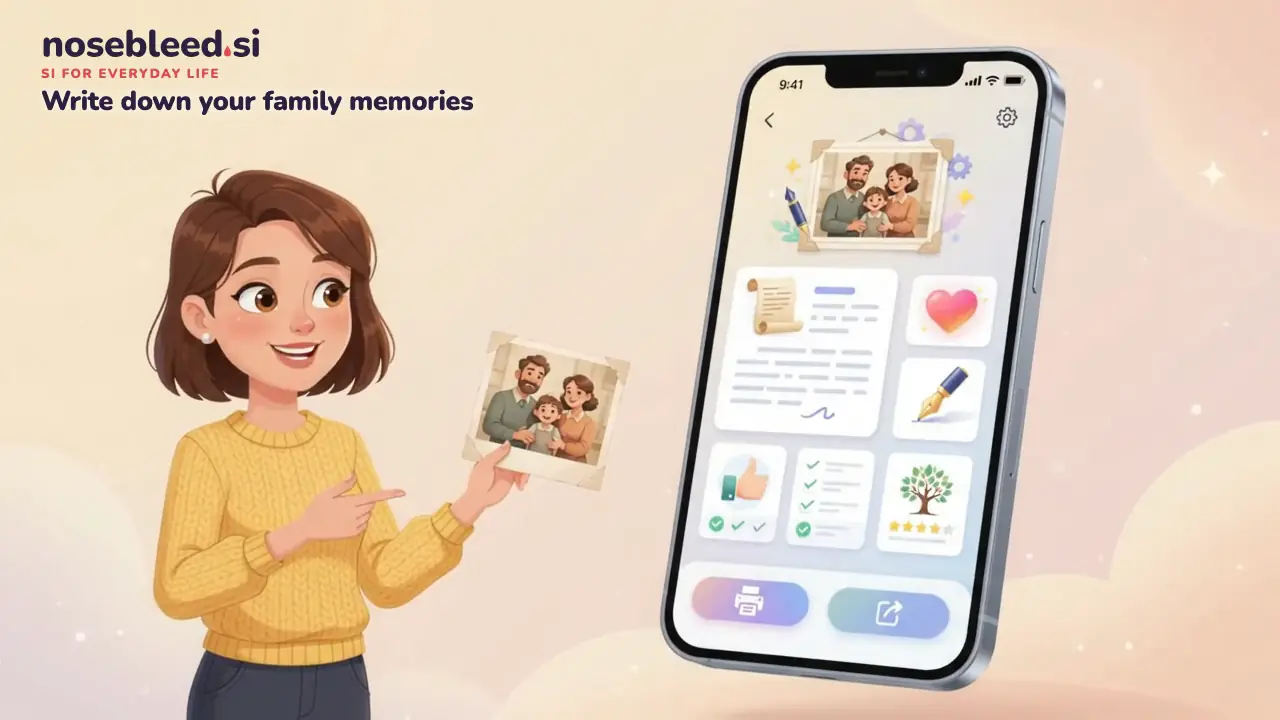
Share the names you know and an old family photo, and SI will help you lay out a simple family tree, spot clues, and plan your next steps in the records.
- ⏱ About 20 minutes
- 🟢 Beginner
- 🧺 You'll need: the names, dates and places you already know, and an old family photo if you have one
- 💬 Works with: any SI chat assistant
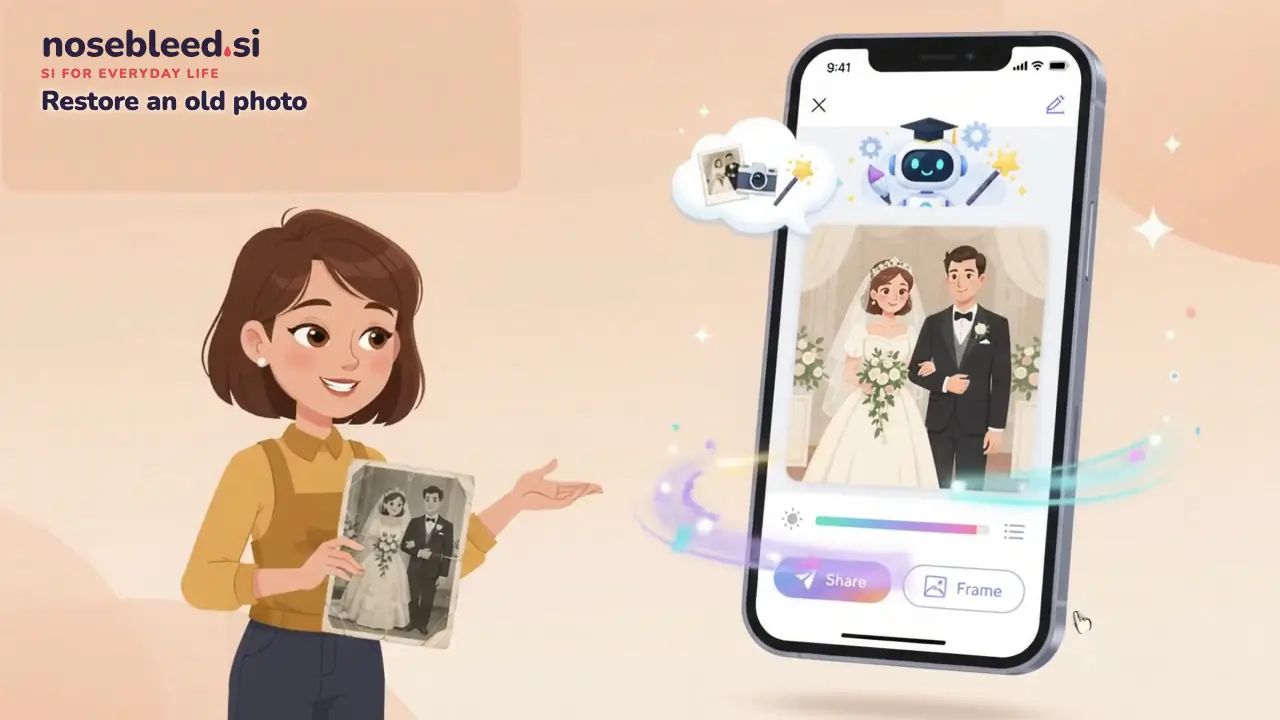
10-second preview of what this looks like.
What SI can do for you here
- Lay out the names and dates you already know as a simple family tree
- Look at an old photo and suggest clues, like roughly when it was taken
- Spot the gaps, and suggest which records might fill them
- Help you write questions to ask older relatives, before memories are lost
Before you start
- SI can invent ancestors. It may suggest names, dates or family links that sound right but aren't true. Treat anything it adds as a guess until you've found it in a real record, such as a certificate or census.
- Be careful with living relatives' details. Leave out their full dates of birth and addresses. You only need names and rough dates for people who have died.
Step by step
Write down what you know
Start with yourself, then parents and grandparents: names, rough dates and places. Gaps are fine.
Start a new chat and paste in the prompt below
Add what you know, and share an old photo if you have one.
How to copy and pasteCheck the tree
Make sure SI has only used what you told it. Ask it to mark anything it guessed.
Ask the family
Ask SI for a few gentle questions to ask older relatives, and record their answers.
Look for real records
Use SI's plan to search official records, starting with the people you know most about.
Copy this prompt
I'd like to start my family history. Here's what I know: my grandparents were Alfred Brown (born about 1920, Leeds) and Mary Brown, née Wilson (born about 1923). They married around 1946. Please lay this out as a simple family tree, using only what I've told you, and don't invent any names or dates. Then tell me what's missing, and which kinds of records might help me find it. I've also shared an old family photo: what clues can you see, such as roughly when it was taken?
Change the highlighted words to the people you know about. Leave out the photo part if you don't have one.
Good follow-up requests
Tap a request to copy it.
What a good answer looks like
Your tree so far: Alfred Brown (born about 1920, Leeds) married Mary Wilson (born about 1923) around 1946.
What's missing: Alfred's and Mary's parents; Mary's birthplace; the exact marriage date and place.
Records that might help: their marriage certificate would usually name both fathers. The 1921 census might show Alfred as a baby with his parents.
Photo clues: the clothes and hairstyles suggest the late 1940s or early 1950s, but that's only a guess.
Why it's good: it sticks to what you told it, explains the next steps, and says clearly when it's guessing.
If yours looks like this, try…
Where SI can get it wrong
⚠️Things to watch for
- It may make up ancestors, dates or family stories that sound convincing. Only trust what you find in a real record.
- It may misread old handwriting on certificates and letters. Check names and dates against the original.
- Its photo dating is a rough guess from clothes and style, not a fact.
🌳When to ask a real person
- Older relatives: their memories, photos and papers are often the best place to start
- Your local library or record office: many offer free access to family history records, and staff can help you get started
- In the UK: the General Register Office for certificates, The National Archives, ScotlandsPeople in Scotland, and GRONI in Northern Ireland. Elsewhere, your national archives or records office
Common questions
Can SI search the records for me?
Some SI assistants can search the web, but most family records sit behind official or subscription websites that SI can't open. Use SI to plan, explain and organise, and do the searching yourself, or with help at a library.
Can it help me read old documents?
Yes. Share a clear photo, and it can often read old handwriting and explain unfamiliar words. Always check names and dates against the original, as it can misread them.
What's the best way to keep it all together?
Start simply: a notebook, or a document on your computer, with one page per person. Ask SI to make you a simple template to fill in.
Free printable worksheet
Teaching this to a group, or prefer to learn on paper? Start your family history is worksheet 1 of our free Power of AI Learning Pack D, with activities and teacher notes.
Download the worksheet (PDF, 4 pages) See all free worksheets
Try next

Spotted a mistake? Got a suggestion?
Tell us about this page. It helps us make it better for everyone.
Prefer email? Write to us at hello@nosebleed.si. We read every email, though we can't always reply.
Page ref ID-041 · Page last updated 12 November 2026 · Video 1 last updated 10 November 2026