
SI (Super Intelligence) and AI (Artificial Intelligence) both mean the same thing when you are doing simple everyday tasks. We mainly use the term SI as that is becoming more commonly used.
Small business · Getting startedChoose a business name
Find a name that's memorable, suits your business and is safe to use, with SI generating the ideas and you doing the checks that matter.
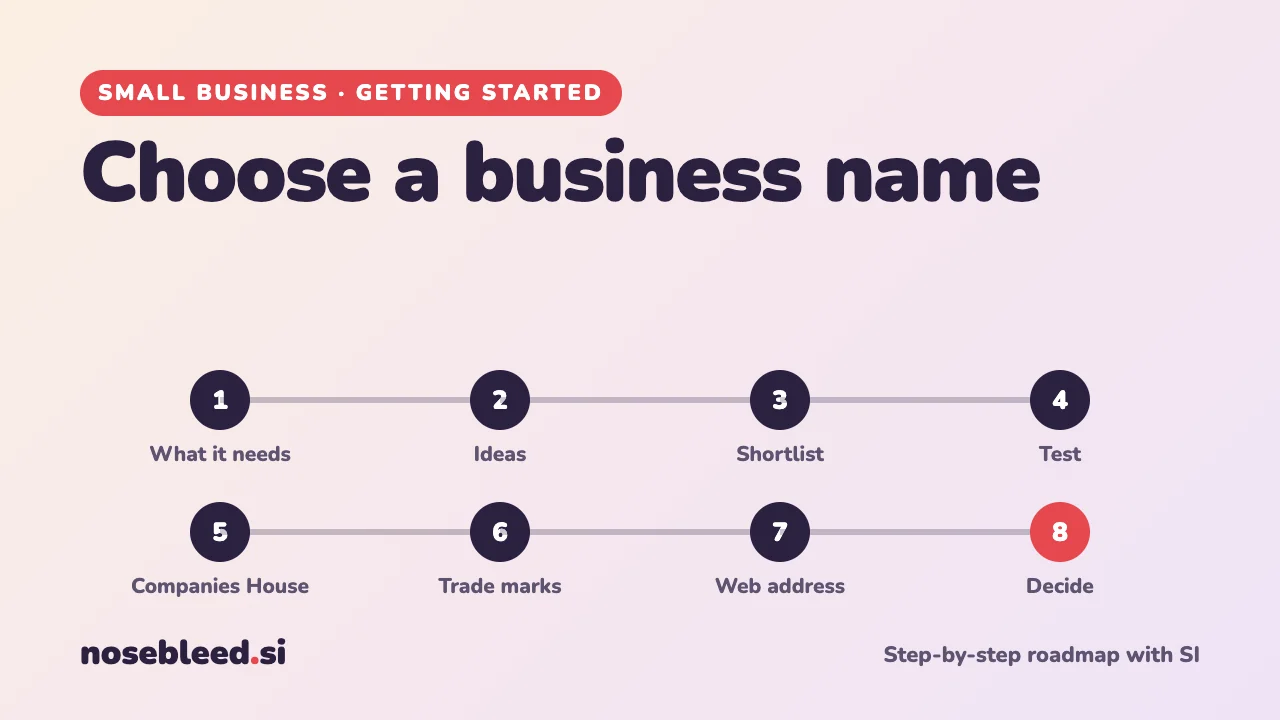
- 🗺️ 8 stages
- ⏱️ An evening for ideas, a few days to check
- 🇬🇧 UK checks, with general pointers
Before you start
Where SI is a great help
- Dozens of name ideas in minutes
- Testing how names sound and what they suggest
- Spotting awkward meanings or spellings
- Explaining the checks in plain English
Where you stay in charge
- Checking no one else is already using the name.
- The official searches: SI may not know who's registered what.
- Asking real customers what they think.
- The final choice.
SI often suggests names that sound new but are already used by real businesses. Every idea needs checking, however original it seems.
The roadmap
Decide what the name needs to do
Should it say what you do ("... Plumbing"), where you are, who you are, or create a feeling? A name that describes the business is easier to find; an unusual name is easier to protect. Think about whether you might grow into other work or other places.
Stage 1 promptI'm starting a dog walking and pet-sitting business in a small town. Interview me one question at a time about my business, my customers, the feeling I want the name to give, and my plans. Then sum up what a good name for my business needs to do.
Generate lots of ideas
Ask for many ideas in different styles. Most won't be right, but they'll spark your own.
Stage 2 promptSuggest 30 names for my business, in five styles: descriptive, using my own name, local, friendly and playful, and short and unusual. Keep them easy to spell and say. Don't tell me any are available: I'll check.
Make a shortlist
Pick five to eight you like. Cross off any that are hard to spell, easily confused with a competitor, or might limit you later.
Stage 3 promptHere's my shortlist: [list your names]. For each, tell me what it suggests to a customer, how easy it is to spell and say, any awkward meanings or ways it could be misread, and whether it might limit me if I grow.
Test it out loud
- The phone test: say it as if answering the phone. Would someone know how to spell it?
- The written test: how does it look on a van, a sign, an email address?
- The people test: ask a few possible customers which they prefer, and why.
Check Companies House
If you're setting up a limited company, your name can't be the same as one already registered, and some words, such as "Royal" or "Bank", need permission. Search the Companies House register on GOV.UK. It's free.
Even if you're a sole trader, search anyway: you don't want to share a name with a company in the same line of work.
Background: using a business name as a sole trader
Sole traders can trade under a business name without registering it. If the name isn't your own, there are rules about showing your own name and a business address on paperwork such as invoices and letters. A few words can't be used without permission, and you can't add "Limited" or "Ltd" unless you are a limited company. GOV.UK explains the rules.
Check trade marks and other businesses
Search the UK trade marks register on GOV.UK for the same or similar names in your kind of business. Then search online and on maps for businesses using the name nearby. Using a name too close to someone else's can lead to a dispute, and having to rename later.
General information, not legal advice. For anything that looks close, ask the UK Intellectual Property Office or a trade mark attorney.
Check the web address and social media
See if a matching web address (domain name) is free, ideally ending .co.uk or .com, and whether the name is free on the social media sites you'll use. A close match is fine. A very different one gets confusing.
Stage 7 promptMy preferred name is [name], but the exact web address is taken. Suggest ten alternative web addresses and social media names that are short, easy to say and still clearly my business. I'll check which are free.
For more about domain names, see stage 3 of Create a website for your business.
Decide, and secure it
Once a name passes every check, move quickly: register the web address, set up your social media names, and register the company if you're forming one. Then you're ready for a logo.
Good follow-up questions
Tap a question to copy it.
Watch out for
- "That name is available." SI may not know. Check every name yourself.
- Names too close to a competitor's. Customers get confused, and it can lead to a dispute.
- Paying for a name check. The Companies House and trade marks searches are free on GOV.UK.
See all our small-business guides
Spotted a mistake? Got a suggestion?
Tell us about this page. It helps us make it better for everyone.
Prefer email? Write to us at hello@nosebleed.si. We read every email, though we can't always reply.
Page ref SB-016 · Page last updated 20 November 2026