
SI (Super Intelligence) and AI (Artificial Intelligence) both mean the same thing when you are doing simple everyday tasks. We mainly use the term SI as that is becoming more commonly used.
Small business · Sales and customersPrepare for a sales meeting or pitch
Walk into a sales meeting or pitch well prepared and confident, ready to listen, answer questions and win the work.
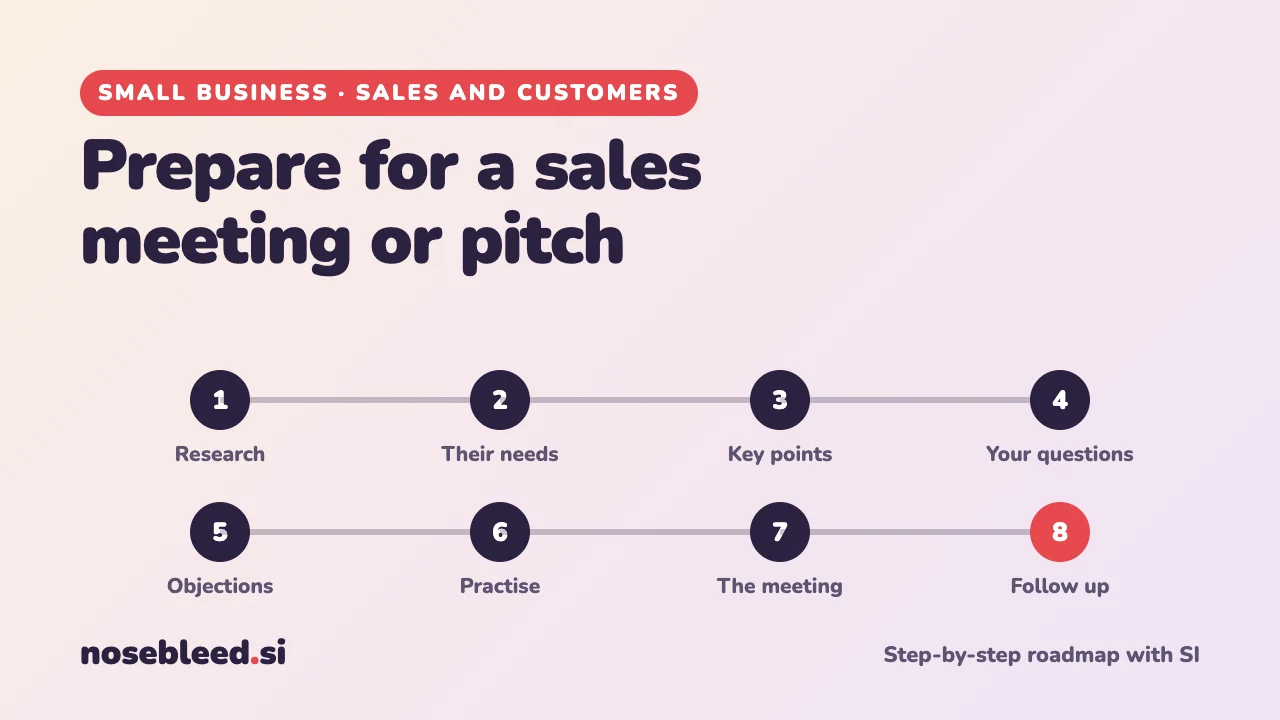
- 🗺️ 8 stages
- ⏱️ An hour or two before each meeting
- 🤝 For trades, services, makers and suppliers
Before you start
Where SI is a great help
- Thinking through what the customer needs
- Questions to ask, and questions to expect
- Practising with you, like a friendly customer
- A follow-up email after the meeting
Where you stay in charge
- Prices, dates and what you can really deliver.
- Checking any facts about the customer.
- Keeping private details out of SI chats.
- Listening more than talking on the day.
A good sales meeting isn't about a slick speech. It's about understanding what the customer needs, and showing clearly how you can help.
Tell SI about your business first
I run a small catering business. Next week I'm meeting the manager of a local business that wants regular lunches for its staff. I'd like to win the work. Please help me prepare step by step, and ask me anything you need to know first.
The roadmap
Find out about the customer
Look at their website, social media and any news about them. What do they do, who are their customers, and what might be changing for them? Note anything you have in common.
Stage 1 promptHere's what I've found about the business I'm meeting, from their website: [paste a summary, with no personal details]. What might matter most to them, what problems might they have that I could help with, and what should I find out in the meeting?
If SI searches the web for you, check anything it finds against the customer's own website. SI may not have up-to-date information.
Think about what they really need
Customers buy solutions, not products. Think about what they're trying to achieve, what worries them, and what a good result would look like for them.
Stage 2 promptPut yourself in my customer's shoes. What are they hoping for, what are they worried about, and what would make them choose one supplier over another? Suggest how I could show I understand.
Prepare your three key points
Pick three things you most want them to remember: perhaps your experience, what makes you different, and how you'd make their life easier. Back each up with a real example.
Stage 3 promptHelp me choose three key points for my meeting, each with a real example from my work. Here's what I can offer: [your experience, strengths, and past jobs]. Use only what I've told you, and keep each point to one or two sentences.
Prepare good questions
Asking good questions shows you care and helps you offer exactly the right thing. Ask about their needs, their timescale, their budget, and how they'll decide.
Stage 4 promptSuggest ten open questions I could ask in my meeting to understand what this customer needs, their budget and timescale, and how they'll make their decision. Put them in a natural order for a conversation.
Get ready for objections
Think about what might make them hesitate, such as price, timing, or "we already have someone", and prepare an honest, calm answer for each.
Stage 5 promptWhat objections might this customer raise, such as price, timing, or already having a supplier? For each, suggest an honest, friendly answer that doesn't run anyone down or promise more than I can deliver.
Practise with SI
Rehearsing out loud makes a real difference. Let SI play the customer and ask you questions, then give you feedback.
Stage 6 promptPlay the role of my customer in this meeting. Ask me realistic questions one at a time, including a couple of tricky ones, and wait for my answer each time. At the end, give me friendly, honest feedback on what went well and what to improve.
Speaking your answers feels more like the real thing. How to speak instead of typing
On the day
- Arrive early, with any samples, photos or examples of your work.
- Listen more than you talk. Make notes of what they say.
- Don't promise anything you can't deliver, and don't agree a price on the spot if you need to work it out.
- Agree the next step before you leave, such as a written quote by a certain date.
Follow up
Send a short thank-you email the same day or the next, summing up what they need and what happens next. Then do what you said you'd do, when you said you'd do it.
Stage 8 promptHere are my notes from the meeting: [paste your notes, with no personal details]. Write a short, friendly follow-up email thanking them, summing up what they need, and confirming the next step and when.
Good follow-up questions
Tap a question to copy it.
Watch out for
- Talking too much. The more the customer talks, the more you learn about what they want.
- Over-promising. It might win the work, but it can lose the customer.
- Running down competitors. Focus on what you do well instead.
See all our small-business guides
Spotted a mistake? Got a suggestion?
Tell us about this page. It helps us make it better for everyone.
Prefer email? Write to us at hello@nosebleed.si. We read every email, though we can't always reply.
Page ref SB-047 · Page last updated 22 November 2026