
SI (Super Intelligence) and AI (Artificial Intelligence) both mean the same thing when you are doing simple everyday tasks. We mainly use the term SI as that is becoming more commonly used.
Small business · Admin and moneyMake sense of a business letter
Understand any confusing business letter in minutes, from HMRC, the council, your bank or a supplier, and know exactly what to do next.
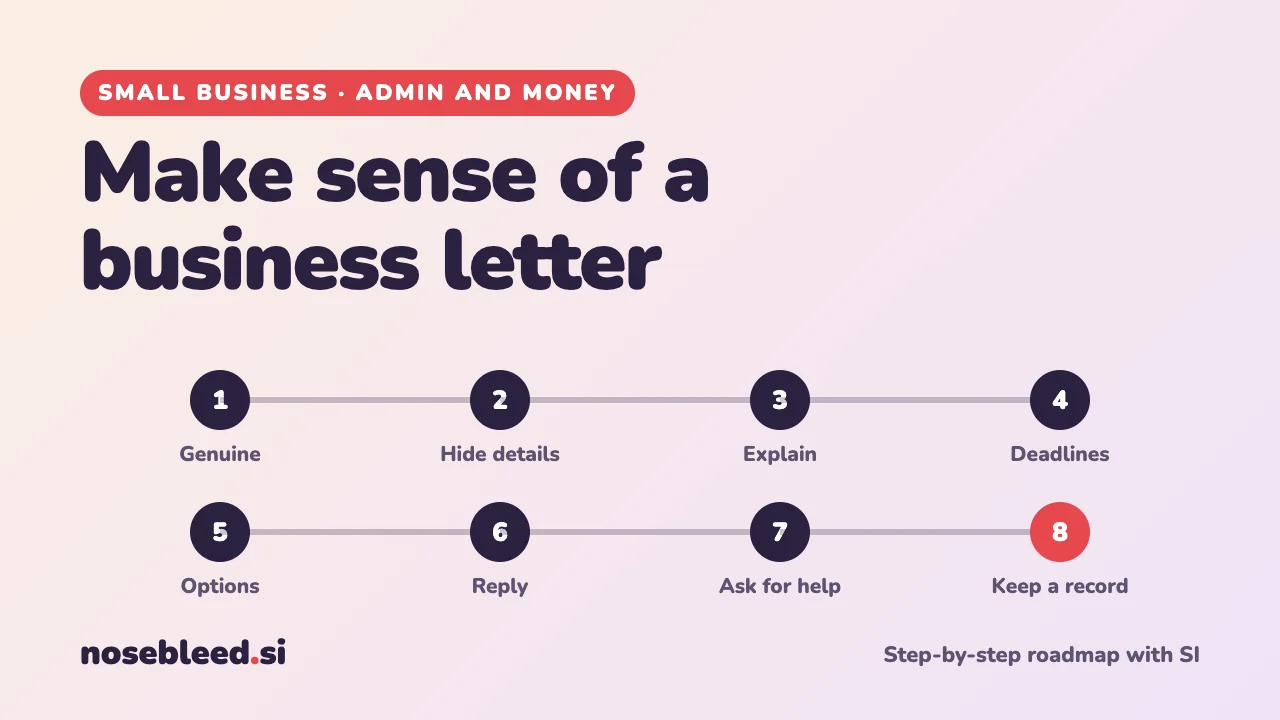
- 🗺️ 8 stages
- ⏱️ About 15 minutes per letter
- ✉️ Letters, emails and official notices
Before you start
Where SI is a great help
- Explaining jargon in plain English
- Pulling out deadlines, amounts and actions
- Explaining your options
- Drafting a clear, polite reply
Where you stay in charge
- Checking the letter is genuine.
- Hiding reference numbers and personal details.
- Checking deadlines and amounts against the letter itself.
- Getting advice when a lot is at stake.
Before you rely on what SI tells you about the rules, see Check what SI tells you.
The roadmap
Check it's genuine
Scammers send convincing letters and emails pretending to be from HMRC, councils, banks and suppliers. Be wary of urgent demands, threats, new bank details, or links to click. Never use the phone number or link in a suspicious letter: find the official contact details yourself, such as on GOV.UK.
Stage 1 promptI've received a letter that claims to be from HMRC. Here's what it says, with my details removed: [paste or describe it]. Are there any warning signs it might be a scam? How can I check it's genuine without using the contact details in the letter?
Hide personal details first
Before you share a letter with SI, cover or remove anything that identifies you or your business: names, addresses, account numbers, tax references, and customers' details.
Get a plain-English explanation
Stage 3 promptI've attached a letter my small business received, with personal details hidden. Explain in plain English: who it's from, what it's about, why I've received it, and whether I need to do anything. Explain any jargon. If anything is unclear, say so rather than guessing.
You can photograph the letter and attach the picture, or type out the important parts. How to attach a file
Find the deadlines and amounts
Missing a deadline is often the most expensive mistake. Get SI to list every date, amount and action, then check each one against the letter yourself.
Stage 4 promptFrom this letter, list every deadline, amount and action, in date order, as a short checklist. Quote the exact words from the letter for each, so I can check them.
Understand your options
Many letters leave you choices: pay now or in instalments, agree or dispute, apply for relief, or ask for more time.
Stage 5 promptWhat are my options in response to this letter? For each, explain what it involves, any deadline, and what happens if I do nothing. Tell me where to check the official guidance, and don't assume rules you're unsure of.
Reply clearly
A good reply quotes the reference number, says clearly what you're asking or agreeing to, and is polite and short. Keep a copy.
Stage 6 promptDraft a short, polite reply to this letter. I want to ask for more time to pay, because [your reason]. Leave [gaps] for my name, address and reference number.
Know when to ask for help
For letters about tax disputes, legal claims, large sums, or anything threatening court action, talk to an accountant, solicitor or adviser. Many official bodies also have helplines: use the number from their official website.
Stage 7 promptShould I get professional advice about this letter? What kind of adviser would help, and what questions should I ask them? Help me write a short summary to take with me.
Keep a record
Keep the letter, your reply, and a note of any phone calls: the date, who you spoke to, and what was agreed. A folder for each year makes this easy.
See also Keep track of income and expenses.
Good follow-up questions
Tap a question to copy it. For personal tax letters, see Understand a tax letter.
Watch out for
- Urgent threats and new bank details. Classic signs of a scam. Check through official contact details.
- Deadlines SI gets wrong. Always check dates and amounts against the letter itself.
- Reference numbers in SI chats. Hide them first.
See all our small-business guides
Spotted a mistake? Got a suggestion?
Tell us about this page. It helps us make it better for everyone.
Prefer email? Write to us at hello@nosebleed.si. We read every email, though we can't always reply.
Page ref SB-024 · Page last updated 20 November 2026