
SI (Super Intelligence) and AI (Artificial Intelligence) both mean the same thing when you are doing simple everyday tasks. We mainly use the term SI as that is becoming more commonly used.
Small business · Staff, helpers and suppliersNegotiate with a supplier
Get a fairer deal from your suppliers on price, payment terms or service, calmly and politely, while keeping a good relationship.
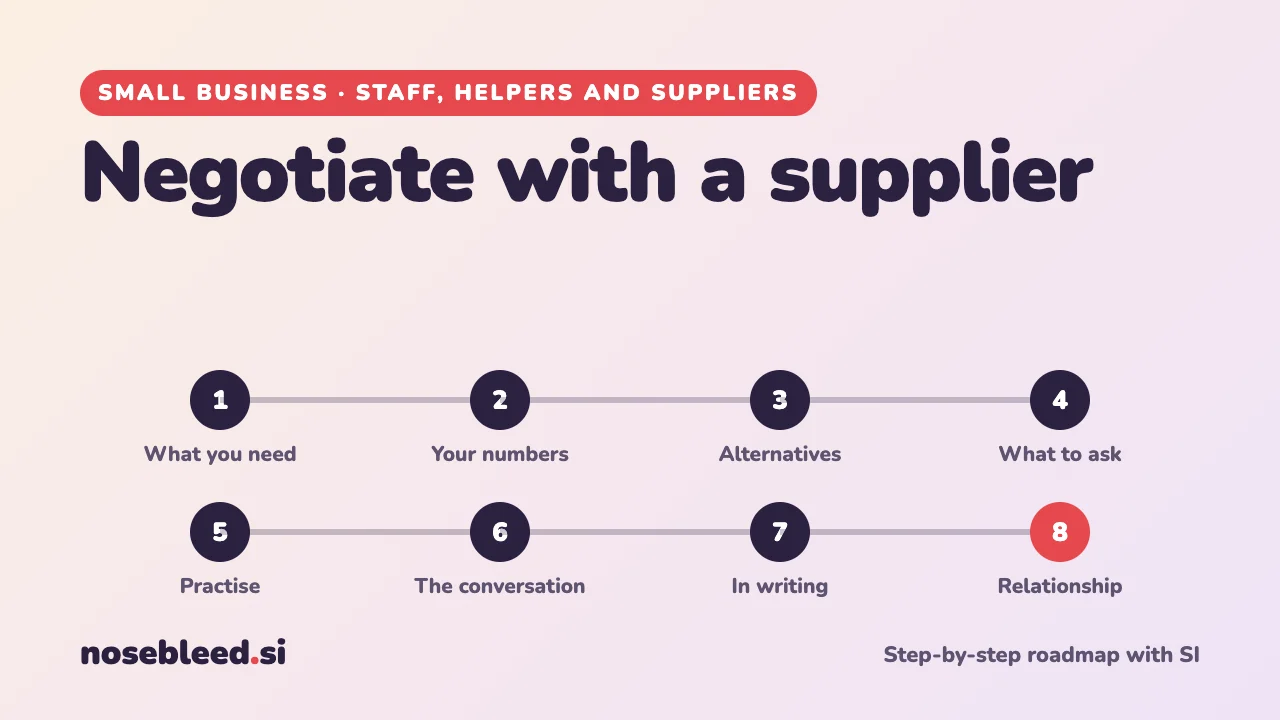
- 🗺️ 8 stages
- ⏱️ An hour to prepare
- 🤝 Prices, payment terms, delivery and service
Have these ready first
Negotiating is much easier when you know what other suppliers charge. If you haven't compared quotes yet, start here:
Before you start
Where SI is a great help
- Working out what to ask for
- Practising the conversation with you
- Polite, firm emails
- Checking the final agreement is clear
Where you stay in charge
- Your figures, and what you can afford.
- When to walk away.
- Reading the contract or terms yourself.
- Keeping a good relationship with suppliers you value.
Negotiating isn't about being tough. The best deals work for both sides, so your supplier is happy to keep looking after you.
Tell SI about your business first
I run a small florist's shop. I'd like to negotiate a better deal with my main flower wholesaler, who I've used for three years. I spend about £1,500 a month with them. Please help me prepare step by step, and ask me anything you need to know first.
The roadmap
Decide what you need
Price isn't the only thing you can negotiate. You might want longer to pay, faster or more reliable delivery, smaller minimum orders, better quality, or a fixed price for a year.
Stage 1 promptApart from price, what could a small business like mine negotiate with a supplier? List the options, and help me decide which two or three matter most to me. Ask me questions first.
Know your numbers
How much do you spend with them each month or year? How long have you been a customer? Have you always paid on time? These are your strengths. Also decide the most you're willing to pay, so you know when to walk away.
Stage 2 promptHere are my figures: [how much you spend, how long you've been a customer, how you pay]. What are my strongest points in a negotiation, and how would a small saving, such as 5%, add up over a year? Use only my figures.
Look at the alternatives
Knowing what other suppliers offer gives you confidence, and a fair benchmark. Get a couple of quotes, even if you'd rather stay where you are.
Decide what to ask for
Decide what you'll ask for, what you'd be happy with, and what you can offer in return, such as a longer commitment, larger orders, prompt payment, or a review.
Stage 4 promptHelp me plan my negotiation: what to ask for first, what I'd be happy to settle for, and three things I could offer in return that would cost me little but help the supplier. Keep it fair and realistic.
Practise with SI
Rehearse the conversation so you feel calm and ready. Let SI play the supplier, including saying no.
Stage 5 promptPlay the role of my supplier's sales manager. I'll ask for [what you want]. Respond realistically, including pushing back, and wait for my reply each time. Afterwards, tell me what I did well and what I could say better.
Have the conversation
- Start positively: say you value working with them.
- Ask clearly for what you want, then stop talking and let them answer.
- Listen to what matters to them, and look for a deal that works for both.
- Don't agree on the spot if you're unsure. It's fine to say you'll think about it.
Stage 6 promptWrite a short, polite email to my supplier asking to discuss our prices and payment terms for next year. Mention how long I've been a customer and that I'd like to keep working together.
Get it in writing
Once you've agreed, confirm it by email: the new prices or terms, when they start, how long they last, and anything you've agreed in return. Check any new contract or terms carefully before you sign.
Stage 7 promptHere are my notes of what we agreed: [paste them]. Write a short, friendly email confirming the agreement clearly, so there's no misunderstanding later.
Keep a good relationship
Pay on time, say thank you, and let them know about problems early. Put a reminder in your diary to review the deal each year.
See Organise your week for repeating reminders.
Good follow-up questions
Tap a question to copy it.
Watch out for
- Saving money but losing quality. A cheaper deal isn't better if it lets your customers down.
- Agreements only made by phone. Always confirm in writing.
- "Change of bank details" emails. Scammers pretend to be suppliers. Always check by phone, using a number you already have. See Spot scams against business.
See all our small-business guides
Spotted a mistake? Got a suggestion?
Tell us about this page. It helps us make it better for everyone.
Prefer email? Write to us at hello@nosebleed.si. We read every email, though we can't always reply.
Page ref SB-049 · Page last updated 22 November 2026