
SI (Super Intelligence) and AI (Artificial Intelligence) both mean the same thing when you are doing simple everyday tasks. We mainly use the term SI as that is becoming more commonly used.
Small business · Website and onlineStart selling online
Start selling online in a simple, safe way, choosing the right place to sell, getting the rules right, and keeping customers happy.
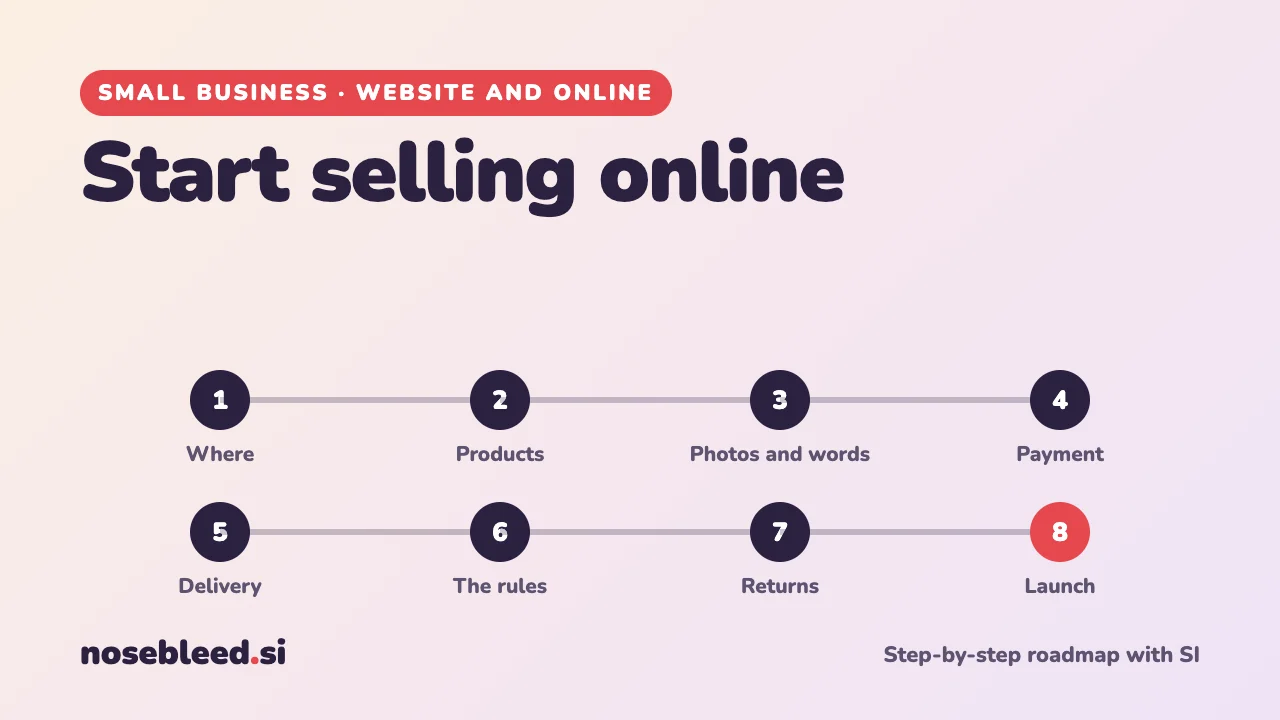
- 🗺️ 8 stages
- ⏱️ A few weeks to set up
- 🛒 Marketplaces, your own shop or social media
Have these ready first
Selling online is much easier once you know your prices and have good descriptions for your products. If you haven't yet, start here:
Before you start
Where SI is a great help
- Comparing ways to sell, for a business like yours
- Product descriptions and shop pages
- Delivery, returns and policy wording
- Explaining the rules in plain English
Where you stay in charge
- Choosing where and how to sell.
- Your prices, costs and fees: check them all.
- Checking the rules for your products.
- Keeping customers' details safe.
This page is general information, not legal advice. Before you rely on what SI tells you about the rules, see Check what SI tells you.
Tell SI about your business first
I make and sell handmade candles and soaps, currently at local craft fairs. I'd like to start selling online, mainly to customers in the UK. I'm not very technical. Please help me step by step, and ask me anything you need to know first.
The roadmap
Choose where to sell
There are three main routes, and many businesses start with one and add others later:
- An online marketplace: lots of shoppers already there, quick to start, but you pay fees and follow their rules.
- Your own online shop: a shop on your website, using a website builder or shop service. More control, but you have to bring the customers.
- Social media: selling through posts and messages. Simple for small amounts, but harder to manage as you grow.
Stage 1 promptCompare selling on an online marketplace, my own online shop, and social media, for a business like mine. For each: how quickly I could start, typical kinds of fees, how customers find me, and how much work it is. Then suggest where I should start, and why. If you name any companies, tell me to check their current fees myself.
Choose what to sell first
Start with a small range: your best sellers, things that post easily, and things where you can make a profit after fees and delivery.
Stage 2 promptHere are my products, with prices and rough costs: [list them]. Help me choose five or six to sell online first. Think about how easy each is to post, how fragile it is, and whether there's still profit after fees and delivery. Use only my figures.
See also Price your products or services.
Prepare photos and descriptions
Online, customers can't pick things up. Clear photos and honest descriptions do that job: size, materials, colour, and anything they'd want to know before buying.
Set up payment
Marketplaces and shop services usually handle payment for you. If you sell through your own website or social media, you'll need a card payment service. Compare the fees, how quickly you get your money, and what happens with refunds and disputes.
Stage 4 promptExplain, in plain English, how taking card payments online works for a small business: the kinds of fees, how long until I get the money, and what happens if a customer disputes a payment. What questions should I ask before choosing a payment service?
Sort out delivery
Decide how you'll post things, how much to charge, and how long delivery takes. Weigh and measure each product in its packaging, and compare a few delivery services.
Stage 5 promptHelp me plan delivery for my products. They're small and fairly fragile, under 1kg each. Suggest packaging, how to compare delivery services, and whether to charge for delivery, offer free delivery over a certain amount, or build it into my prices. Then write a short, clear delivery information page.
Follow the rules for selling online
In the UK, selling online to the public comes with extra rules. In general, you must:
- Say who you are, with a business name, a contact address and an email address.
- Give clear information before people buy: what it is, the total price including delivery, and how to cancel.
- Allow cancellation: customers usually have 14 days after receiving goods to change their mind, with some exceptions, such as personalised or perishable items.
- Look after their information, with a privacy notice.
- Make sure products are safe, with any warnings or labels your products need.
Stage 6 promptIn plain English, what UK rules apply when a small business sells handmade candles and soaps online to the public? Cover the information I must give, cancellations and refunds, product safety and labelling. Mark anything I should check, and tell me where to check it.
See also Write your terms and conditions and Keep customer information safe.
Write your returns policy
A clear, fair returns policy builds trust. It must not take away customers' legal rights, and refunds for cancelled orders must usually be made within 14 days.
Stage 7 promptWrite a clear, friendly returns and refunds policy for my online shop, in line with UK consumer rights for online sales. Cover how to return something, who pays for return postage, and how quickly refunds are made. Mark anything I should check with [CHECK].
Launch and look after customers
Before you launch, place a test order yourself from start to finish. Then tell your existing customers, and reply quickly to every question and order.
Stage 8 promptMake me a launch checklist for my online shop: testing, final checks, and how to tell my existing customers. Then write three short templates: order confirmation, dispatch with delivery details, and a thank-you after delivery.
See also Get more reviews and Plan a month of social media posts.
Good follow-up questions
Tap a question to copy it.
Watch out for
- Fees that add up. Marketplace, payment and delivery fees can eat your profit. Check each one.
- Fake buyers and overpayment tricks. Be wary of buyers asking you to use a different payment method or send money back. See Spot scams against business.
- "No returns" notices. They can't remove customers' legal right to cancel.
See all our small-business guides
Spotted a mistake? Got a suggestion?
Tell us about this page. It helps us make it better for everyone.
Prefer email? Write to us at hello@nosebleed.si. We read every email, though we can't always reply.
Page ref SB-028 · Page last updated 21 November 2026