
SI (Super Intelligence) and AI (Artificial Intelligence) both mean the same thing when you are doing simple everyday tasks. We mainly use the term SI as that is becoming more commonly used.
Small business · MarketingPlan a launch or special offer
Plan a launch, opening or special offer that brings people in, with a clear timeline, honest offers and a simple way to see what worked.
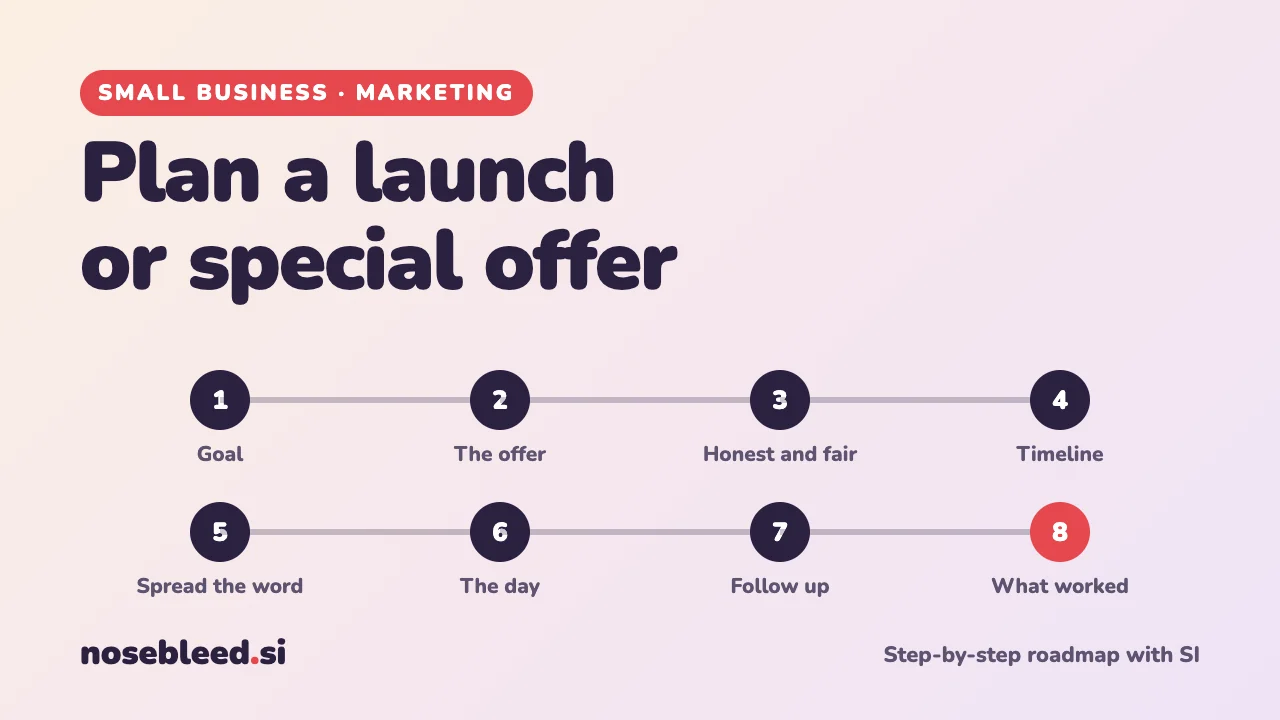
- 🗺️ 8 stages
- ⏱️ Plan a few weeks ahead
- 🎉 Openings, new products, seasonal offers
Before you start
Where SI is a great help
- Ideas for offers and events that suit your business
- A week-by-week plan, so nothing's forgotten
- Words for posters, posts, emails and press
- Simple ways to measure what worked
Where you stay in charge
- What you can afford to offer.
- Making sure every offer is genuine and clear.
- Dates, times, stock and staffing.
- Safety and permissions for events.
This page is general information, not legal advice. Before you rely on what SI tells you, see Check what SI tells you.
Tell SI about your business first
I run a small gift shop in a market town. I'd like to plan a launch for our new online shop in about six weeks. My budget for this is about £200. Please help me step by step, and ask me anything you need to know first.
The roadmap
Decide what you want it to achieve
New customers? Bringing back old ones? Selling a new product, or filling quiet days? One clear goal makes every other decision easier, and lets you tell if it worked.
Stage 1 promptHelp me choose one clear goal for my launch, with a simple number I could measure, such as new customers, sign-ups or sales. Ask me questions first about my business and what I most need.
Choose the offer or the hook
A reason to come now: an opening event, a free taster, a launch discount, a gift with purchase, or a "bring a friend" offer. Work out what it will cost you before you commit.
Stage 2 promptSuggest eight launch ideas for my business that fit my goal and budget, from events to offers. For each, give a rough idea of the cost to me, and the risks. Mark your three favourites and say why.
See Price your products or services to check a discount still leaves you a profit.
Keep it honest and fair
Offers must be genuine and clear. In general:
- "Was" prices must be real prices you've actually charged, not inflated ones.
- Deadlines and "limited stock" must be true. Fake urgency can break consumer law.
- Conditions, such as end dates or minimum spends, must be clear and easy to find.
- Prize draws and competitions have their own rules, including clear terms.
Stage 3 promptHere's my offer and how I plan to describe it: [paste it]. Check it for anything that might be misleading or unclear under UK consumer rules, suggest fairer wording, and tell me where to check the official guidance.
Make a timeline
Work backwards from the day. Most launches need a few weeks: ordering stock, making signs and posters, telling people, and getting everything ready.
Stage 4 promptMy launch is on [date]. Make me a week-by-week plan working back from that day, covering stock, printing, social media, emails, local press, staffing and the day itself. Put it in a simple table with a column to tick things off.
Spread the word
Use everything you already have: your customer email list, social media, posters in your window, local noticeboards, and local press if there's a real story.
Stage 5 promptWrite the words for my launch: a social media post for two weeks before, one for the day before, and one on the day; a short email to my customers; and a window poster heading. Same message throughout, friendly and clear, with the offer's conditions.
See Plan a month of social media posts, Write an email newsletter, Write a press release and Make signs, posters and menus.
Get ready for the day
Check you've got enough stock, enough help, and a simple plan for what happens when. For an event, think about safety, numbers, and whether you need any permission, such as for music, food or using the pavement.
Stage 6 promptMake me a checklist for the day of my launch event: setting up, who does what, what could go wrong and what to do, and how to collect customers' details with their permission so I can keep in touch.
See Write a simple risk assessment and Keep customer information safe.
Follow up
Thank people who came or bought, share a few photos (with permission), and give new customers a reason to come back.
Stage 7 promptWrite a short thank-you post for after my launch, and a friendly email to new customers who signed up, welcoming them and mentioning what's coming next. No pressure, no exaggeration.
Learn what worked
A week or two later, look back at your goal. What brought people in? What cost too much? Note it down for next time.
Stage 8 promptMy goal was [your goal]. Here's what happened: [sales, sign-ups, what people said, what it cost]. What worked, what didn't, and what three things should I do differently next time? Use only my figures.
Good follow-up questions
Tap a question to copy it.
Watch out for
- Offers that cost more than they bring in. Work out the cost before you announce it.
- Fake urgency and made-up "was" prices. They can mislead customers and break consumer law.
- Running out on the day. Plan for more people than you expect, and have a polite plan if you do run out.
See all our small-business guides
Spotted a mistake? Got a suggestion?
Tell us about this page. It helps us make it better for everyone.
Prefer email? Write to us at hello@nosebleed.si. We read every email, though we can't always reply.
Page ref SB-045 · Page last updated 22 November 2026